
Sustainability X-Lab
Sustainability X-Lab is an interdisciplinary research platform focused on AI-driven climate, energy, ecological, and urban systems. The lab is dedicated to developing intelligent methods and decision-support tools for climate change mitigation and adaptation, energy transition, ecological protection, and sustainable urban development. By integrating artificial intelligence, digital Earth modeling, remote sensing, large-scale environmental data, and policy simulation, X-Lab investigates the complex interactions among the Earth system, human society, energy infrastructure, and natural ecosystems. Its research spans AI-enabled sustainable manufacturing transformation, flexible and net zero energy systems, urban net-zero development, autonomous intelligent systems, urban resilience and climate risk forecasting, and AI for ecological and environmental change across building, city and global scales.
Led by Prof Xiaoling Zhang, Sustainability X-Lab brings together a research community of young scientists, engineers, and innovators from the University of Hong Kong and beyond, committed to producing scientifically robust insights and practical, cost‑effective solutions for global environmental change and sustainable development challenges.
Research Focus of X-Lab
Zero-Carbon Energy Systems and Pivotal Disruptive Energy Technologies:
Integrating Artificial Intelligence, Big Data Analytics, Geographic Information Systems, and the Internet of Things to Advance Next-Generation Renewable Energy Solutions, Enable Data-Driven Optimization and Operational Decision-Making, and Foster Interdisciplinary, System-Level Innovation for Deep Decarbonization of the Energy Sector. A few specific research foci are highlighted below:
-
Integrating Artificial Intelligence, Big Data Analytics, Geographic Information Systems, and the Internet of Things to Establish Intelligent, Efficient, and Renewable-Dominated Energy Systems;
-
Advancing Next-Generation Renewable Energy Innovations to Overcome Systemic Challenges in Energy Conversion, Storage, and End-Use Efficiency Across Global, Urban, and Building Scale;
-
Developing High-Performance Energy-Efficient Building Materials, Designing Net-Zero Energy Water Supply Infrastructure, and Accelerating Research, Development, and Standardization of Energy-Storage-Integrated and Zero-Carbon Buildings;
-
Enhancing System Flexibility and Resilience in Urban, Building, and Transportation Energy Sectors through Data-Driven Analytics, Multi-Objective Optimization Models, and Decision-Support Frameworks, with Emphasis on High-Penetration Renewable Integration, Dynamic Demand Response, Intelligent Electric Vehicle Charging Infrastructure, and Building-Level Energy Performance Optimization.
AI-Driven Optimization of Urban Net Zero Transportation and Autonomous Intelligent Systems:
To harness visual and multimodal AI, edge computing, and sensor-guided robotics to optimize autonomous vehicles, electrified mobility platforms (e.g., eVTOLs), smart building energy systems, and urban logistics, thereby enhancing operational efficiency and enabling net-zero carbon urban transportation and built environments through real-time, sensor-based decision-making.
Urban-Rural Resilient System Modelling and Climate Risk Prediction:
Integrating Artificial Intelligence with Earth Observation and Remote Sensing Technologies to Forecast Extreme Weather Hazards, Inform Adaptive Infrastructure Planning, Develop Climate Risk Transfer Mechanisms and Financial Instruments, and Enable Integrated Management of Compound Climate Risks—including Heatwaves, Floods, and Cascading Environmental Disruptions.
Artificial Intelligence for Ecology and Biodiversity Conservation:
Leveraging High-Resolution Habitat Monitoring, Remote Sensing, and Machine Learning to Transform Biodiversity Assessment, Detect Ecological Threats, and Enable Evidence-Based Conservation Strategies and Integrated Ecological Risk Management.
X-Lab Director

Prof. Xiaoling Zhang
Sustainability X-Lab (Director)
Professor Xiaoling Zhang is a member of the Institute for Climate and Carbon Neutrality (ICCN) and holds the position of full professor in the Department of Real Estate and Construction, Faculty of Architecture, at HKU. She is a sustainability scientist primarily focusing on the intricate relationship between humanity and the environment. Her work centers on developing models of the carbon-climate-human system by understanding the interactions and feedback mechanisms within this coupled complex system, as well as the socio-ecological processes influencing climate and global environmental change. As the Director of 'Sustainability X-Lab', she spearheads a research team delving into four core themes:
-
Human Dimensions of global & regional environmental change.
-
Integrated Assessment Models (IAMs) for Energy, Ecology, Environment and Economy.
-
Convergence Science and Geospatial analytics for Environmental Sustainability.
-
Nature-based solutions, AI technology driven innovations and system engineering solutions in achieving Sustainable Development Goals (SDGs).
In recent years, her research has been dedicated to exploring affordable yet effective ‘net zero’ technologies and systems, including renewable and clean energy technologies across various spatial and temporal scales. Professor Zhang has been honored as a Clarivate Highly Cited Researcher in Cross-Field for the years 2022 & 2023. Furthermore, since 2020, she has been listed among Stanford’s top 2% most highly cited & life-long impact scientists in the field of Environmental Engineering.
The X Lab encompasses three interdisciplinary research clusters: Climate Change, Ecology and Land Use; Energy and Power Systems Engineering; Urban Sustainability Science.

Honorabal X-Lab Fellows

Prof. Jianpeng CAO
Sustainability X-Lab Fellow
Assistant Professor in the Department of Real Estate and Construction, Faculty of Architecture, the University of Hong Kong (HKU)
His research links the construction industry with advanced information technologies and innovative project delivery models. He is working on generative design platforms (product configurators) for mass-customized buildings, knowledge graph applications to integrate design and manufacturing/construction processes, digital twins for offsite construction, and cloud manufacturing paradigms in industrialized construction.
Website:
https://www.arch.hku.hk/staff/rec/cao-jianpeng/
Email: kempcao@hku.hk

Prof. Hongshan GUO
Sustainability X-Lab Fellow
Assistant Professor in the Department of Architecture, the University of Hong Kong (HKU)
A core thread running through Dr. Guo’s academic explorations is the profound influence of radiant environments in perceived thermal comfort. With a series of works investigating the intricacies of mean radiant temperature in both indoor and outdoor settings, she offers insights into how thermal comfort shapes and is shaped by the spaces we inhabit. Complementing this is her emphasis on integrating architectural designs with sustainable energy mechanisms, notably photovoltaics and geothermal solutions, championing an approach that benefits both the environment and the occupants.
Website:
https://www.arch.hku.hk/staff/arch/guo-hongshan/
Email: hongshan@hku.hk

Prof. Tianren YANG
Sustainability X-Lab Fellow
Assistant Professor and Assistant Head of the Department of Urban Planning and Design at the University of Hong Kong (HKU)
Fields of Interest:
-
Computational urban models: urban analytics, scenario-based predictive modelling (e.g. spatial equilibrium) and decision support systems
-
Digital-physical interactions: digital behavioural dynamics (e.g. telework and e-commerce) and their spatial implications
-
Land use and transport planning: urban spatial structure (e.g. polycentricity and new towns), mobility patterns and integrated planning solutions
Website:
https://www.arch.hku.hk/staff/upad/yang-tianren/
Email: tianren@hku.hk

Prof. Tao WANG
Sustainability X-Lab Fellow
Assistant Professor in the Department of Real Estate and Construction at the Faculty of Architecture, The University of Hong Kong
His research revolves around Socio-Physical Intelligence for Resilience & Equity (SPIRE), integrating artificial intelligence, physics-based modelling, and social dynamics to advance sustainable, resilient, and equitable built environments. His work aims to move urban decision-making from reactive estimation to predictive intelligence through scalable tools for urban energy modelling, climate adaptation, decarbonisation, and environmental equity.
Website:
https://www.arch.hku.hk/staff/rec/wang-tao/
Email: wtao@hku.hk
Honorable X-Lab Fellows (Affiliated Member)

Prof. Zhu LIU
Sustainability X-Lab Fellow (Alliliated Member)
Professor, Tsinghua University
Research Interests:
-
Global monitoring of greenhouse gases based on satellite remote sensing, inversion models, and geographic information systems (GIS)
-
Quantitative assessment of global carbon budget, including carbon data, carbon emissions, and carbon footprint quantification
-
Ecological economics and industrial ecology
-
Quantitative research on sustainable development
Website: https://scholar.harvard.edu/zhu/home
Email: zhuliu@tsinghua.edu.cn

Prof. Baojing GU
Sustainability X-Lab Fellow (Affiliated Member)
Qiushi Distinguished Professor, Zhejiang University
Research Interests:
-
Eco-environmental effects of nitrogen cycling
-
Human-nature coupled modeling
-
Global change and sustainable development
-
Agricultural Resources and Environment
-
Soil Science
-
Resources Utilization and Plant Protection
Website:
https://person.zju.edu.cn/bjgu
Email: bjgu@zju.edu.cn
X-Lab Members

Dr. Yuankang Xiong
Sustainability X-Lab Member
CEL Cluster
Research Assistant Professor, Institute for Climate and Carbon Neutrality (ICCN), Department of Real Estate and Construction, The University of Hong Kong
Potential impacts of pandemics on global warming, agricultural production, and biodiversity loss (One Earth)
Predicting the effect of confinement on the COVID-19 spread using machine learning enriched with satellite air pollution observations (PNAS)
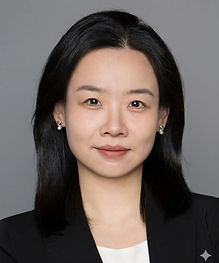
Dr. Biqing Zhu
Sustainability X-Lab Member
EPS Cluster
Research Assistant Professor, Department of Real Estate and Construction, The University of Hong Kong
Guest Research Scholar
Integrated Assessment and Climate Change Research Group
Energy, Climate, and Environment Program
Exploratory Modeling of Human-natural Systems Research Group
Advancing Systems Analysis Program

Dr. Zhenting Zhao
Sustainability X-Lab Member
CEL Cluster
Research Assistant, Department of Real Estate and Construction, The University of Hong Kong
Research Interests: Cropland Conservation; Sustainable Land Use; Renewable Energy Expansion; Land-Use Competition; Land–Energy Nexus

Dr. Zhixue Yang
Sustainability X-Lab Member
EPS Cluster
Research Assistant, Department of Real Estate and Construction, The University of Hong Kong
Research Interests: Climate resilience,Hydrogen energy, Decarbonization of the power system

Dr. Yang Liu
Sustainability X-Lab Member
EPS Cluster
Post doctoral fellow, Department of Real Estate and Construction, The University of Hong Kong
Research Interests: AI-driven Control and Operation & Maintenance of renewable energy system

Dr. Zhidian Jiang
Sustainability X-Lab Member
USS Cluster
Post doctoral fellow, Department of Real Estate and Construction, The University of Hong Kong
Research Interests: the thermal effect of BGIs, built environment and microclimate, "dual carbon" and eco-city.

Dr. Yufeng Wu
Sustainability X-Lab Member
EPS Cluster
Post doctoral Fellow, The University of Hong Kong
Research Interests: Disentangled Representation Learning; Power Systems with High Renewable Energy Penetration; Cyber-Physical Distribution Systems

Ms. Gefei Liu
Sustainability X-Lab Member
CEL Cluster
Ph.D student,
Department of Real Estate and Construction,
The University of Hong Kong

Ms. Xiaoxiao Zhang
Sustainability X-Lab Member
CEL Cluster
Ph.D student,
Department of Real Estate and Construction,
The University of Hong Kong

Ms. Wanying Liu
Sustainability X-Lab Member
CEL Cluster
Ph.D student,
Department of Real Estate and Construction,
The University of Hong Kong
Research Interests: Climate Action (SDG 13); Land Use Management; Life on Land (SDG 15).

Ms. Xinru Min
Sustainability X-Lab Member
USS Cluster
Visiting Research Student, The University of Hong Kong; Joint PhD Student, City University of Hong Kong & Renmin University of China
Research Interests: Social-ecological Sustainability, Inequality and Concentrated Poverty, Sustainable Urban Planning

Ms. Xiaoshao Mu
Sustainability X-Lab Member
EPS Cluster
Ph.D student
Department of Architecture and Civil Engineering, City University of Hong Kong
Research Interests: Life Cycle Assessment; 3D Concrete Printing; Circular Economy

Mr.Richmond Darko Danquah
Sustainability X-Lab Member
USS Cluster
Ph.D student,
Department of Real Estate and Construction,
The University of Hong Kong
Research Interests: Energy Efficiency, Social Sustainability, Digital Technologies, Project management

Ms. Ziwei Zhu
Sustainability X-Lab Member
CEL Cluster
Ph.D student,
Department of Real Estate and Construction,
The University of Hong Kong
Research Interests: Energy Efficiency, Social Sustainability, Digital Technologies, Project management
rdanquah@connect.hku.hk

Mr. Han Wang
Sustainability X-Lab Member
EPS Cluster
Ph.D student,
Department of Real Estate and Construction,
The University of Hong Kong
Research Interests: Carbon Emission and Neutrality, Environmental Management, Life Cycle Assessment

Ms. Zhuoran LI
Sustainability X-Lab Member
EPS Cluster
Ph.D student,
Department of Real Estate and Construction,
The University of Hong Kong
Research Interests: Artificial Intelligence and Machine Learning in Climate Science

Mr. Jize Zhang
Sustainability X-Lab Member
USS Cluster
Ph.D student, Department of Real Estate and Construction, The University of Hong Kong
Research Interests: Sustainable Built Environment, Social Equity and Human Well-being
jzzhang@connect.hku.hk

Ms. Guanli Qiao
Sustainability X-Lab Member
EPS Cluster
Ph.D student, Department of Real Estate and Construction, The University of Hong Kong
Research Interests: Energy efficiency, Material Flow Analysis, Technology assessment

Mr. Hongxu Pu
Sustainability X-Lab Member
EPS Cluster
Ph.D student, Department of Real Estate and Construction, The University of Hong Kong
Research Interests: Applications of Artificial Intelligence (AI4Urban Science) and 3D Printing Technologies in Urban Infrastructure and Sustainable Cities.

Mr. Yucong Xu
Sustainability X-Lab Member
EPS Cluster
Ph.D student, Department of Real Estate and Construction, The University of Hong Kong
Research Interests: Waste Management, Circularity, Multi-objective Synergy

Mr. Hao Chen
Sustainability X-Lab Member
EPS Cluster
Ph.D student, Department of Real Estate and Construction, The University of Hong Kong
Research Interests: AI for Sustainability Science, Life Cycle Assessment

Ms. Yuxi Fan
Sustainability X-Lab Member
USS Cluster
Ph.D student,
Department of Real Estate and Construction,
The University of Hong Kong
fan-yu-xi@connect.hku.hk

Mr. Jiawei Feng
Sustainability X-Lab Member
USS Cluster
Ph.D student,
Department of Real Estate and Construction, The University of Hong Kong
Research Interests: Complex Systems, Complex Networks, Human Mobility, Urban Science

Mr. Weiyi Jiang
Sustainability X-Lab Member
USS Cluster
Ph.D student,
Department of Real Estate and Construction,
The University of Hong Kong